🔍 Ferroelectricity Series Overview
In this series, we’re unraveling the physics of ferroelectric materials — from their origins at the atomic scale to their real-world applications in sensors, actuators, and memory devices.
⏪ Previously on the Blog
We explored the theoretical models that explain how ferroelectricity emerges through spontaneous symmetry breaking and phase transitions, guided by the Landau and Ginzburg frameworks.
🎯 What’s in This Post?
In this post, we’ll delve deep into the domain structures that form in ferroelectric materials and examine how external electric fields induce polarization switching — a key feature behind their use in memory and logic devices.
🧩 What Are Domains?
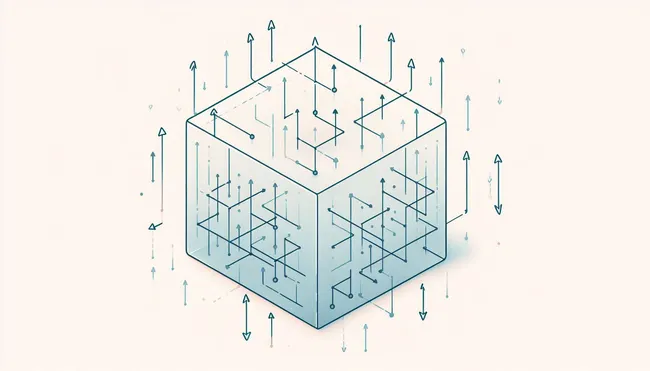
In a ferroelectric crystal below the Curie temperature, spontaneous polarization appears — but it does not align uniformly across the entire crystal. Instead, the material breaks up into regions called domains, each with a uniform but differently oriented polarization vector.
These domains form because they minimize the overall free energy by reducing depolarization fields and internal stresses. For instance, a region with polarization pointing upward may be adjacent to one pointing downward. The boundary between these regions is called a domain wall.
🧬 Microscopic Nature of Domains
Each domain is a region where the electric dipoles (microscopic charges displaced within the unit cell) are aligned in the same direction. These alignments are stable due to short-range interactions, but can reorient under external stimuli like electric fields or mechanical strain.
The number and orientation of possible domain states depend on the crystal symmetry. For example:
- In tetragonal ferroelectrics like BaTiO₃, polarization vectors may point along the ±x, ±y, or ±z directions.
- In rhombohedral materials, the polarization can align along body diagonals.
This gives rise to multiple domain configurations and domain wall orientations.
🎥 Domain Walls: Boundaries of Change
Domain walls are not sharp steps but are rather regions of gradual polarization rotation — typically spanning a few nanometers. These walls cost energy, but they also help the system reduce long-range electric and elastic energies.
There are various types of domain walls:
- 180° walls: polarization changes direction but remains along the same axis.
- Non-180° walls: involve changes in both direction and axis of polarization (e.g., 90°, 71°, 109° walls).
Their dynamics are critical to many ferroelectric properties.
⚡ Polarization Switching: Reversing the Dipoles
When an external electric field is applied to a ferroelectric material, it tries to align the polarization vector with the field direction. This can be achieved in two main steps:
-
Nucleation: New domains aligned with the field are formed. These typically nucleate at defects, interfaces, or grain boundaries — regions with locally lower switching barriers.
-
Growth and Motion: These domains expand by moving domain walls, consuming regions with opposite polarization. This growth continues until the entire crystal is realigned.
Switching is not always smooth — it often proceeds via jerky, discrete steps as domain walls get pinned and depinned by defects. This is evident in the hysteresis loop we discussed earlier.
🌀 Coercive Field and Switching Speed
The coercive field is the minimum external electric field needed to reverse the polarization of a ferroelectric. It is influenced by:
- Material type
- Crystal orientation
- Temperature
- Presence of defects or pinning centers
Faster switching requires higher fields but may also increase leakage or fatigue. Optimizing this trade-off is vital for memory device design.
💾 Why This Matters: Ferroelectric Memory
In ferroelectric random-access memory (FeRAM), the two opposite polarization states (say, up and down) are used to encode binary logic — “1” and “0”. Since these states are stable even after power is removed, ferroelectrics offer non-volatile memory with high endurance and low power consumption.
During read or write operations:
- An electric field pulse is applied to switch or probe the polarization.
- The resulting current spike indicates whether switching occurred, revealing the bit stored.
📉 Challenges in Switching
Despite their advantages, ferroelectric switching is limited by issues such as:
- Fatigue: degradation after repeated switching cycles
- Imprint: bias towards one polarization state over time
- Retention loss: gradual relaxation of polarization
Advanced material engineering, doping, and electrode design are used to mitigate these effects.
🧠 Final Thoughts
Ferroelectric domains and their switching behavior are at the heart of what makes these materials useful — from energy-efficient memory devices to sensitive sensors and actuators. By understanding how domains form, interact, and respond to fields, we unlock the potential of ferroelectrics in real-world applications.
🧭 Up Next
In the next post, we’ll study phase transitions in ferroelectric materials — how temperature and other factors drive transitions between paraelectric and ferroelectric states.
share and Follow for the journey through the fascinating world of ferroelectricity!